The short answer
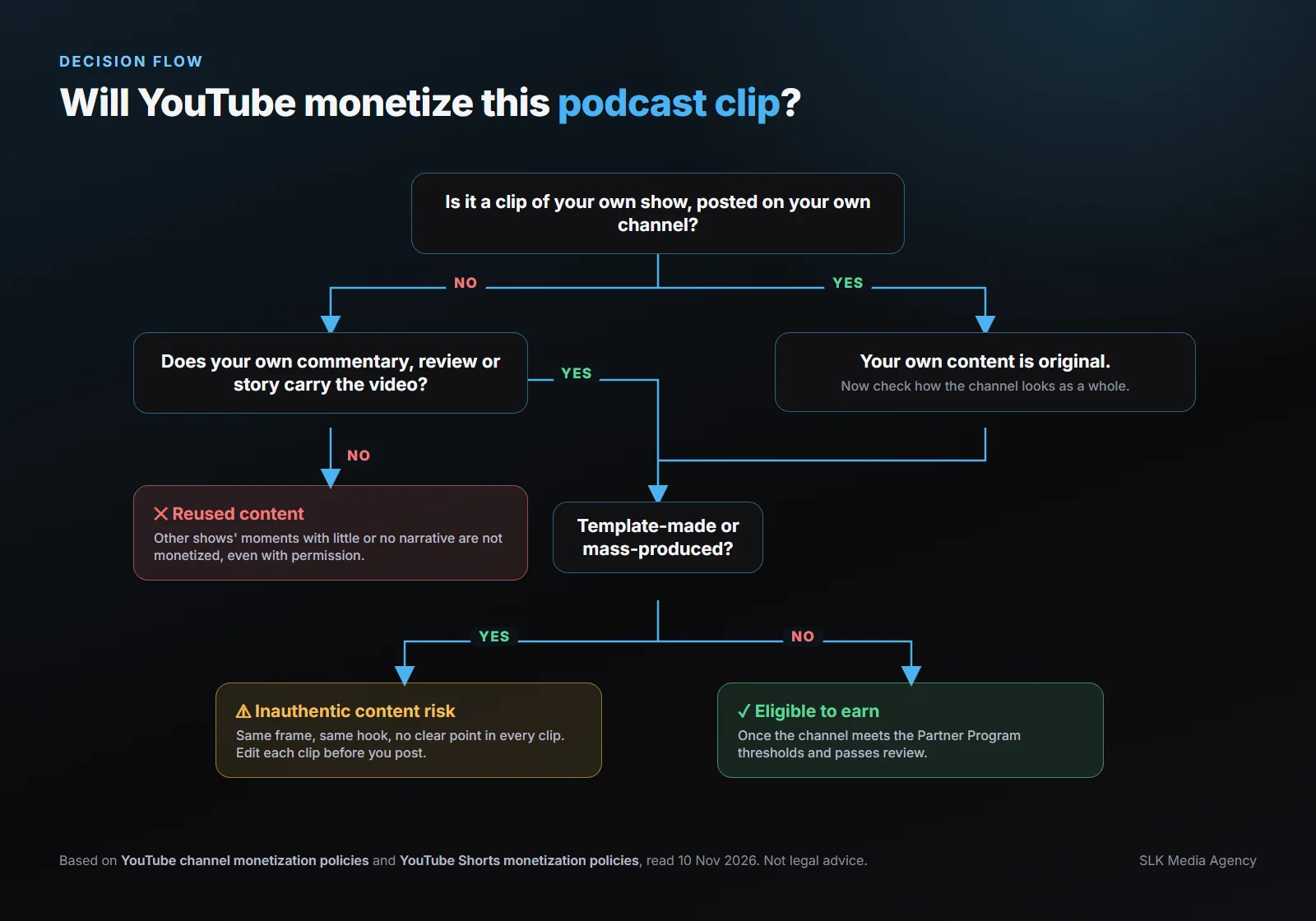
Yes in two situations, and no in a third, which is where most clip channels get turned down. Since July 2025 YouTube also names a risk that hits AI clipping workflows. The flowchart further down shows where your channel stands, in YouTube's own words.
What changed in YouTube's July 2025 update, and what did not
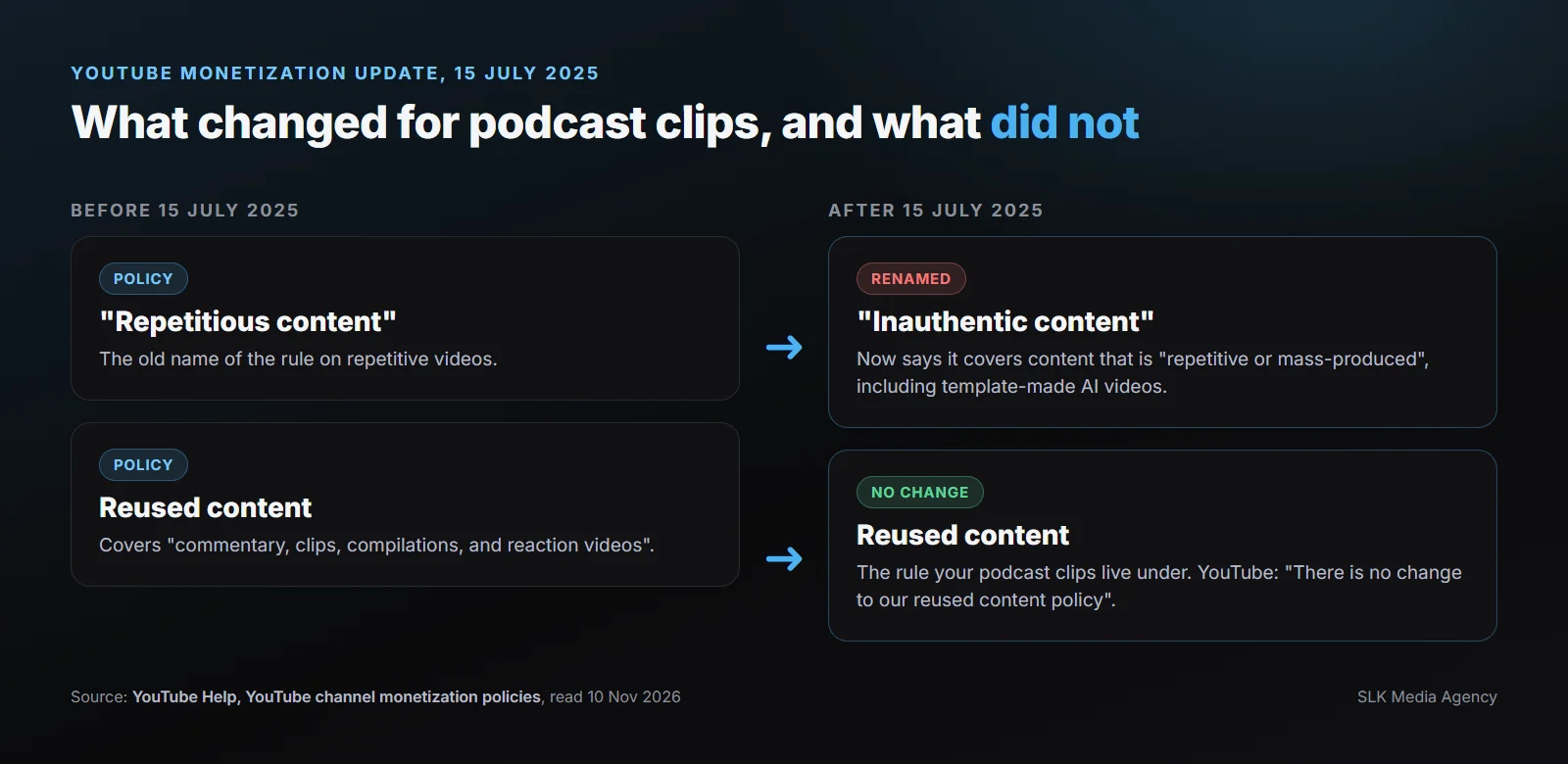
On 15 July 2025 YouTube made what it called "a minor update" to its channel monetization policies. The old "repetitious content" policy was renamed "inauthentic content", to make clear it covers content that is "repetitive or mass-produced".
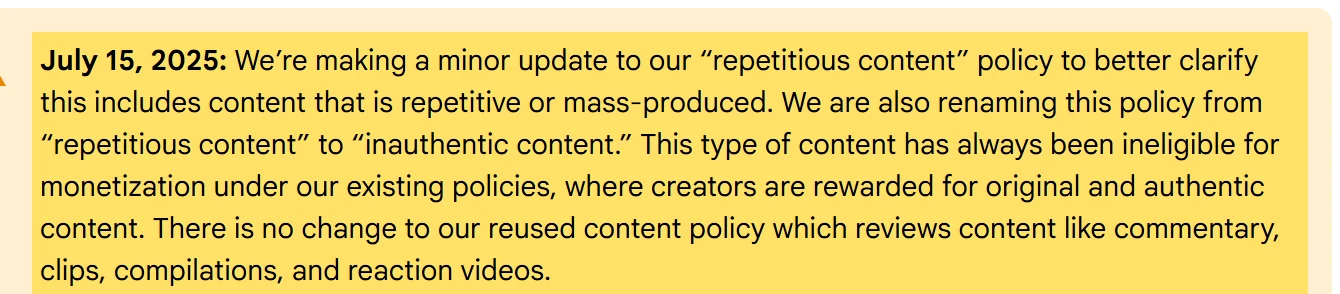
The notice adds a line worth reading twice: "This type of content has always been ineligible for monetization under our existing policies". In other words, YouTube clarified the rule. It did not start a new crackdown.
Headlines at the time said YouTube would stop paying for AI content. YouTube's own page says something narrower. It also says, in the same notice: "There is no change to our reused content policy". That is the policy that governs podcast clips, because YouTube says it covers "commentary, clips, compilations, and reaction videos".
So the rule a podcast clip channel lives under did not change in 2025. What changed is that YouTube now names template-made, mass-produced videos as a problem, including AI-generated ones. Both rules matter if you post clips, and both are quoted below as they read on 10 November 2026.
What YouTube's reused content policy says about podcast clips
YouTube defines reused content as channels that repurpose content "that's already on YouTube or another online source without adding significant original commentary, substantive modifications, or educational or entertainment value."
Three lines on the same page decide most podcast cases:
- "Our reused content policy applies to your channel as a whole." A reviewer looks at the channel, not one Short.
- "This policy applies even if you have permission from the original creator." A guest's or host's blessing does not make a clip monetizable.
- "Reused content is separate from YouTube's Copyright enforcement, which means it's not based on copyright, permission, or fair use." Passing Content ID or having a fair use argument does not settle it.
Here is how YouTube's own allowed and not allowed examples map onto the clips podcasters actually post:
| YouTube's example (quoted) | Allowed? | What it means for a podcast clip |
|---|---|---|
| "Content that primarily features the uploading creator in the video" | Yes | Clips of your own show, with you on camera, on your own channel. |
| "Edited footage from other creators where you add a storyline and commentary" | Yes | A clip from another show used inside your own take on it. |
| "Using clips for a critical review" | Yes | Reviewing or answering another podcast's argument. |
| "Clips of moments from your favorite show edited together with little or no narrative" | No | A channel of highlights from a famous podcast you do not host. |
| "Content uploaded many times by other creators" | No | The same viral moment that many clipping channels already posted. |
| "Promotion of other people's content (even if you have permission)" | No | A channel that only reposts a client's or partner's episodes. |
Clipping your own podcast vs clipping someone else's
Most pages that rank for this question mix up two different people. Their answers only make sense once you split them.
You host the show and clip it on your own channel
This is the low-risk case. YouTube lists content that "primarily features the uploading creator" as allowed. The video podcast and its clips are your original content, so the reused content policy is rarely the issue. The risk moves to the second rule: whether the channel looks templated and repetitive.
You run a clipping channel built on other people's podcasts
This is where monetization fails. A channel of moments from a popular show, cut with no narrative, matches YouTube's not allowed example almost word for word. Permission from the show does not help, and neither does a fair use claim, because YouTube says the policy is not based on either. Clipping channels often call their edits transformative, but YouTube's test is its own list, not a fair use argument. The only route YouTube describes is adding real commentary, a storyline or a critical review, so that your voice and your take carry the video.
If you are a host who pays a clipping channel or an editor to post your clips on their channel, the clips may be fine for you and still be reused content for them. Clips that live on your own YouTube channel are the safer setup.
Are AI-made podcast clips at risk?
Using AI tools is not banned. YouTube's not allowed list targets a pattern, not a tool: "AI-generated content made with generic or unoriginal templates giving the impression of mass production without adding the creator's original, authentic insights or perspective."
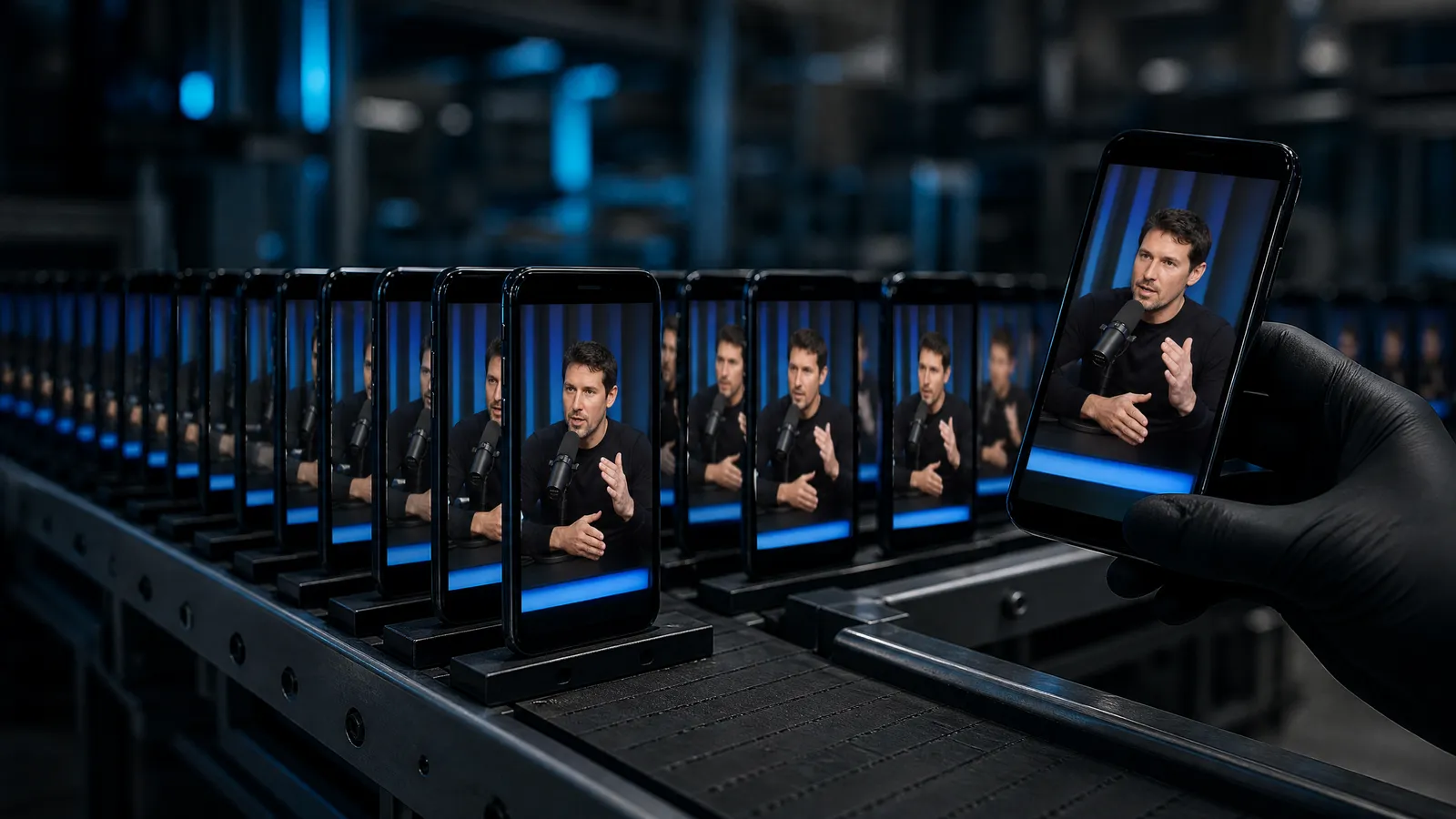
The same section, now titled generic or repetitive content, says content "that looks like it's made with a template" or that "may feel repetitive to viewers after watching several videos in a row from the same channel" can lose monetization. It also bars "Image slideshows, templated storylines, or scrolling text with minimal or no narrative, commentary, or educational value."
That describes what an unedited AI clipping workflow tends to produce. The tool picks moments by its own rules, every clip gets the same caption style, the same frame and the same hook, and twenty of them land on the channel in a week. Each one may be fine on its own. As a channel, they can read as mass-produced.
YouTube also says what is allowed: the "same intro and outro for your videos, but the bulk of your content is different", and a series where "each video has a distinct storyline, focus, or concept". So a consistent look is fine. Identical clips with no clear point are not.
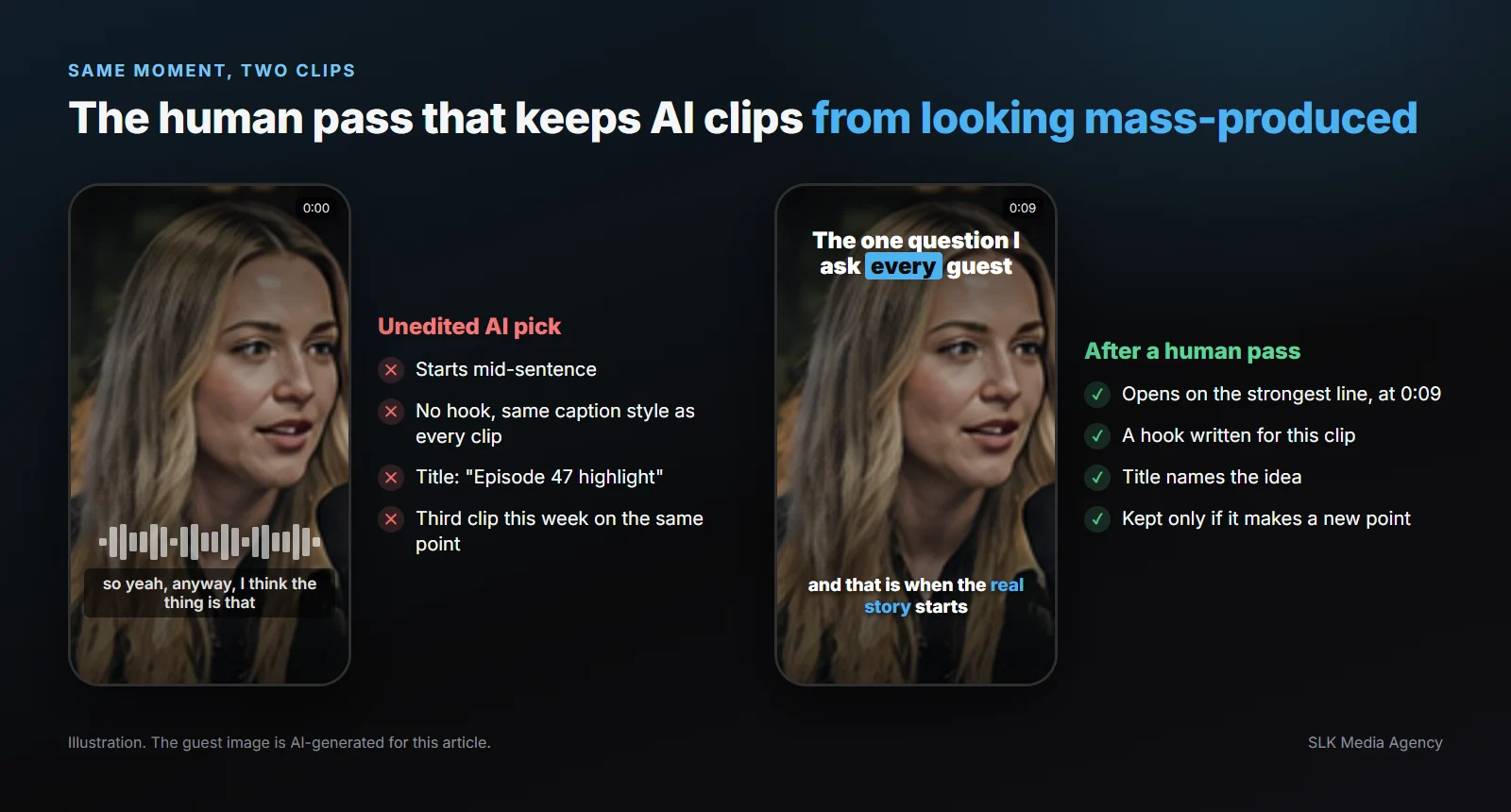
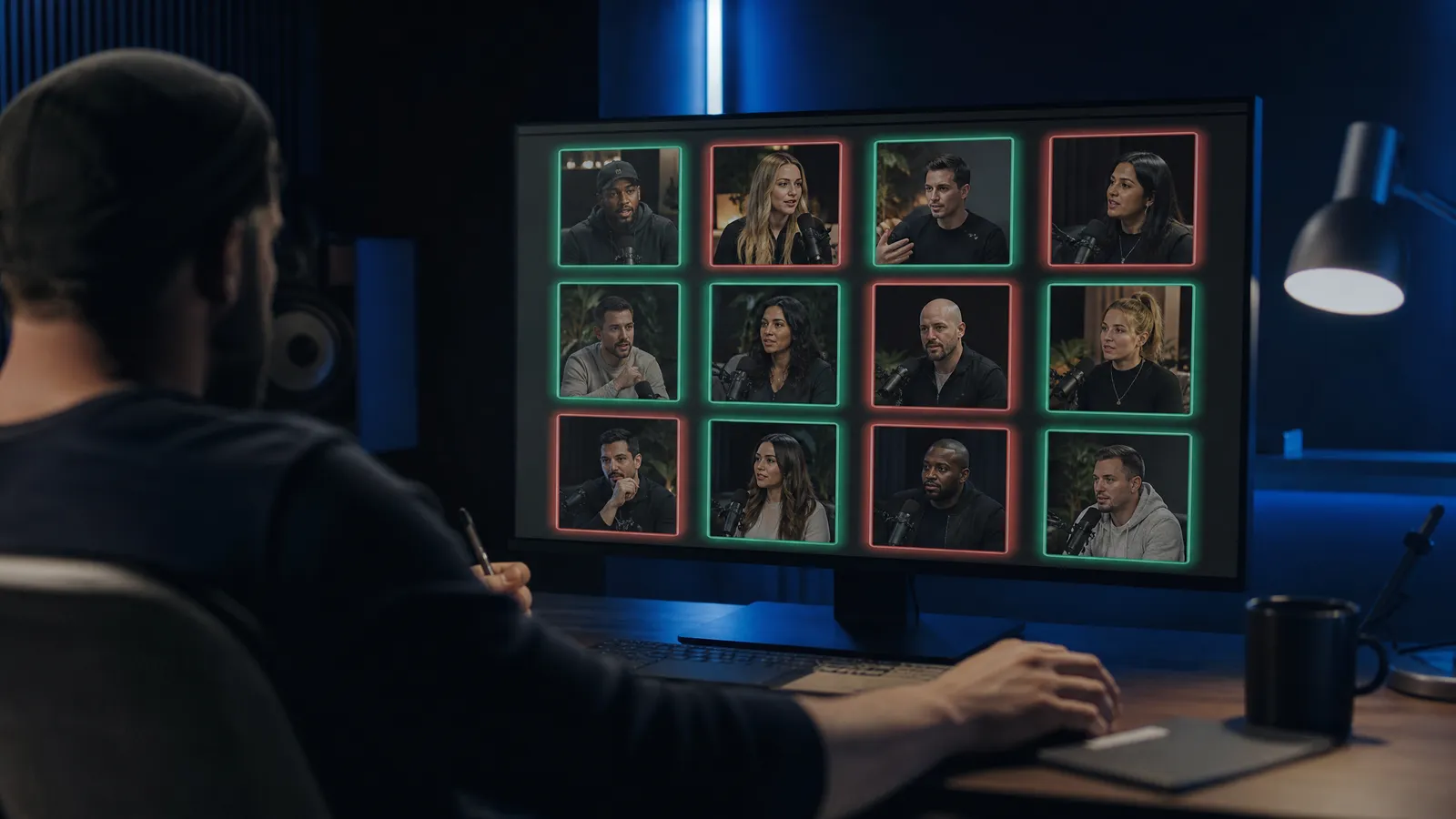
The fix is a human pass on every AI clip: check that the moment makes sense on its own, rewrite the hook and title for that clip, cut dead air, and drop clips that repeat a point the channel already made. That is the whole method behind our toolkit, The AI Clip Fix, which gives keep, fix or bin rules and the fix steps inside OpusClip, Descript, Riverside and Vizard.
Do podcast Shorts earn money?
Yes, through Shorts revenue sharing, but some views do not count. YouTube's Shorts monetization policy says these views are not eligible: "Non-original Shorts, such as unedited clips from others' movies or TV shows", "reuploading other creators' content from YouTube or other platform", and "compilations with no original content added".
For a host clipping their own episodes, Shorts work like long videos: your own show is original content. For a clipping channel, unedited Shorts from someone else's show are exactly the views YouTube excludes. Captions and subtitles alone are unlikely to count as original content; YouTube's examples of allowed reuse all involve your own commentary, story or presence.
We do not publish a per-view rate here. YouTube does not set a fixed amount per 1,000 views, so any single number you see quoted is one channel's result, not a rule.
Requirements: what a podcast channel needs for the YouTube Partner Program
YouTube's Partner Program page lists two ways to reach the ad revenue thresholds, both with 1,000 subscribers:
- 1,000 subscribers with 4,000 qualified watch hours in the last 12 months, or
- 1,000 subscribers with 10 million qualified Shorts views in the last 90 days.
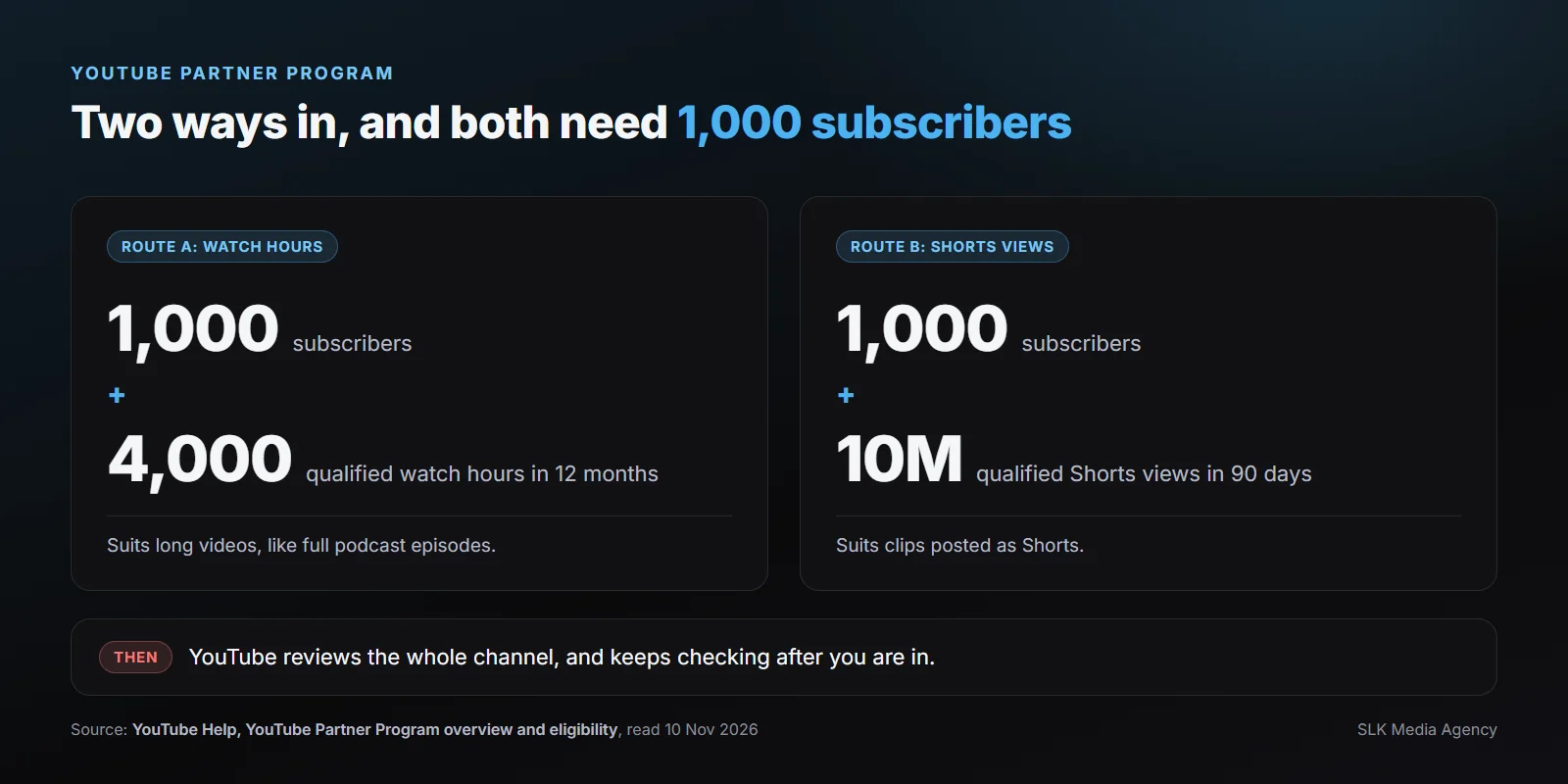
Hitting the numbers does not get you in by itself. YouTube says "Our team will review your channel as a whole", and that it continues to check channels already in the program. Monetization can be turned off later for a policy breach, and YouTube warns that violations "may result in monetization being suspended or permanently disabled".
For podcasters, the watch hours route suits long videos such as full episodes, and the Shorts route needs 10 million Shorts views in 90 days. A channel that posts both, with episodes in a podcast playlist and clips pointing to them, keeps both routes open.
Why podcast channels get rejected for reused content
In one r/podcasting thread from around August 2025, a host said their podcast channel passed 1,000 subscribers and 4,000 hours, then was turned down for reused content. Commenters guessed at the causes: titles like "Episode #" on every upload and the same static waveform thumbnail on every video. Two other hosts in the thread said they were approved.
That is anecdote, not YouTube's ruling, but it fits the policy text. A reviewer looking at the channel as a whole sees dozens of near-identical tiles. Audio-only uploads over a still image can also look like "scrolling text with minimal or no narrative" if nothing on screen changes.
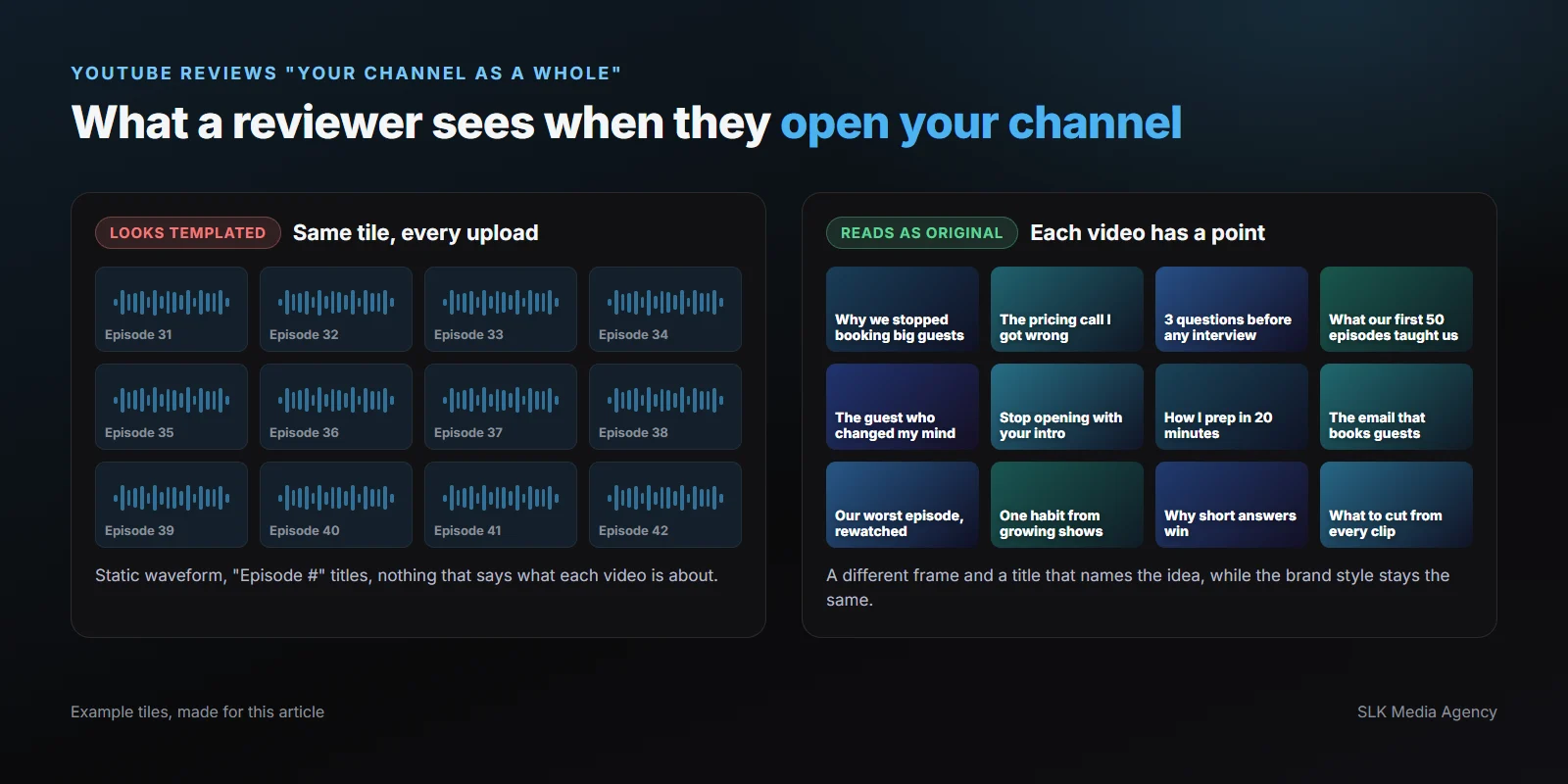
Before you appeal or reapply, change what a reviewer sees first: distinct titles that say what each episode or clip is about, thumbnails that differ, and clips that each make one clear point.
Checklist: before you post clips on a monetized channel
- Post clips of your own show on your own channel. That is the case YouTube lists as allowed.
- Give every clip a point. One idea, story or answer per clip, with a title that names it. No "Episode 47 highlight".
- Rewrite every AI pick. Check the moment stands alone, trim the start to the first strong line, and rewrite the tool's hook.
- Vary the look where it counts. A shared caption style is fine; identical thumbnails and frames across every upload are a risk.
- Do not repeat yourself. Two clips making the same point in a week add volume, not value.
- Use other shows only with your own take. Commentary, a review or a story around the clip, never a bare repost.
- Clear your music and footage. YouTube asks that you have "all the necessary rights to commercially use all visual and audio elements in your content."
- Keep full episodes on the channel. They earn the watch hours and give clip viewers somewhere to go.
This article explains YouTube's published policies as they read on 10 November 2026. It is not legal advice, and YouTube makes the final call on every channel.
Frequently asked questions
Can you monetize podcast clips on YouTube?
Yes, if the clips are of your own podcast on your own channel, or if clips from another show sit inside your own commentary or review. YouTube does not monetize channels built from other shows' moments edited together with little or no narrative.
Can you monetize podcast clips without adding original value?
Not if they are someone else's. YouTube's reused content policy requires significant original commentary, substantive changes or educational or entertainment value, and it applies even if you have permission. Clips of your own show are your original content.
Did YouTube stop monetizing AI content in July 2025?
No. YouTube renamed its repetitious content policy to inauthentic content and said there was no change to its reused content policy. AI-made videos lose monetization when they look template-made and mass-produced without the creator's own insight, not because AI was used.
Do podcast Shorts count toward YouTube monetization?
Yes. One Partner Program route is 1,000 subscribers and 10 million qualified Shorts views in 90 days. Views of unoriginal Shorts, reuploads and compilations with no original content added are not eligible for Shorts revenue sharing.
Can you monetize a podcast on YouTube without video?
YouTube does not ban audio-only uploads, but its generic content rules bar slideshows and scrolling text with minimal narrative or commentary. A channel of identical static waveform videos is the pattern hosts report being rejected for, so vary titles and visuals at minimum.
How can podcasters earn money on YouTube besides ads?
Inside the Partner Program, YouTube also offers features such as channel memberships and Super Chat, subject to their own rules. Outside it, a channel can send viewers to sponsors, paid products or services, which do not depend on YouTube's ad revenue rules.
Sources
- YouTube Help: YouTube channel monetization policies. Reused content, generic or repetitive content and the 15 July 2025 notice. Quoted as read on 10 November 2026
- YouTube Help: YouTube Partner Program overview and eligibility. Thresholds and channel review. Read on 10 November 2026
- YouTube Help: YouTube Shorts monetization policies. Views not eligible for Shorts revenue sharing. Read on 10 November 2026
- YouTube Help: What kind of content can I monetize?. Commercial rights to visual and audio elements. Read on 10 November 2026
- Social Media Today: YouTube clarifies monetization update on inauthentic, repeated content. Press coverage of the July 2025 update

Natalie Nicholas works on the growth team at SLK Media Agency, where the team edits, captions and posts short clips from podcast episodes every week. She writes about the first seconds of a clip: the cut, the frame and the hook.